Algorithmic Learning Platform.
This case study is not about polishing a landing page. It is about designing and engineering a complete practice platform where coding, progress, community, and assessment integrity all had to work together.
Performance
~45ms
Avg. Execution Time
System
Microservices
Architecture
Platform Snapshot
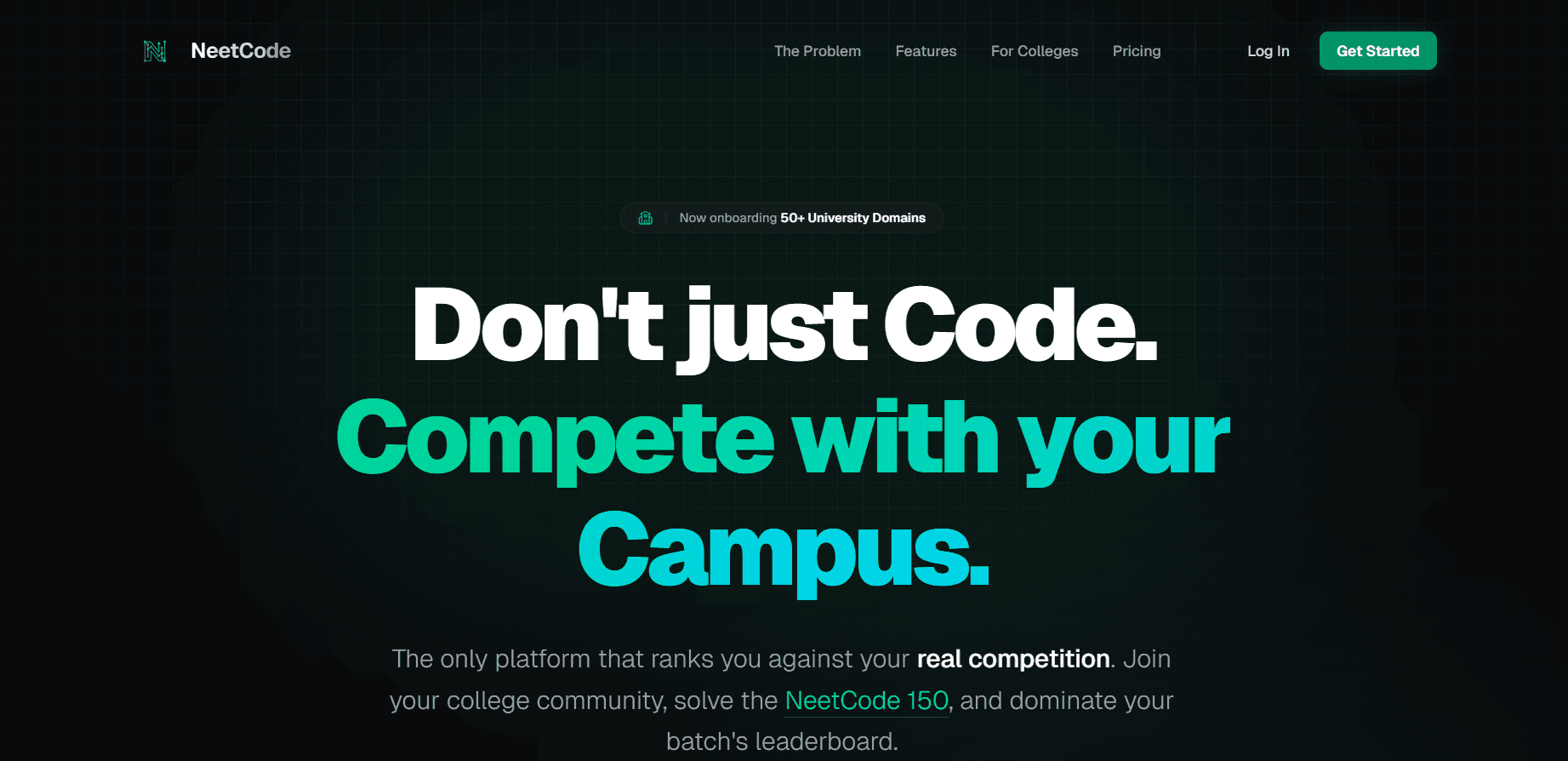
Practice platform overview
Product Reality
We framed NeetCode as a structured product experience, not just a prettier shell around coding questions.
Scope
A structured product, not a single conversion page.
The challenge was to make the platform feel fast, trustworthy, and habit-forming across every key surface users touch during preparation.
Outcome
We turned the platform into a clearer learning system.
Users needed to trust the engine, understand their progress, and feel momentum while practicing. That meant the UX could not stop at “solve problem, submit code.”
We designed the experience around fast feedback loops, visible progress, secure execution, and stronger product structure across the full prep journey.
Frontend
Next.js + Tailwind
Backend
Node.js + Express
Database
MongoDB Atlas
Execution
Judge0 + Docker
Product Tour
The screens that sell the real depth of the platform.
Instead of showing one pretty hero shot, this case study should walk visitors through the product surfaces that make NeetCode believable as a serious learning platform.
Screen 01
Coding workspace
Problem Workspace
A focused coding environment with editor, problem statement, submissions, and execution feedback in one place.
Recommended Slot
Learning and Progress
Recommended Screenshot Slot
Progress dashboard or topic roadmap with completion states and performance breakdown.
Learning and Progress
Topic-based practice, streaks, and skill tracking so users know what to practice next instead of guessing.
Recommended Slot
Community and Competition
Recommended Screenshot Slot
Leaderboard, contest, or community pod view showing rankings and peer activity.
Community and Competition
Leaderboards, pods, and collaborative accountability that turn solo prep into a product people return to.
Build Notes
The product decisions that mattered.
Secure Code Execution
Judge0 plus Docker sandboxing enabled fast, isolated program execution under controlled resource limits.
AI Proctoring Layer
Browser-lock and suspicious-behavior detection created a stronger environment for assessments and remote interviews.
Multi-Surface Product Design
We treated the platform like a learning system, not a single page: workspace, progress, community, and auth all had to work together.
Low-Latency Feedback
The product was built around immediate response, because practice platforms lose trust the moment execution feels slow.
Technical Architecture
How the system was structured.
Because this was an interactive practice platform, the case study needs one section that proves the backend model was deliberate, not improvised.